“I looked for someone among them who would build up the wall and stand before me in the gap on behalf of the land…” — Ezekiel 22:30
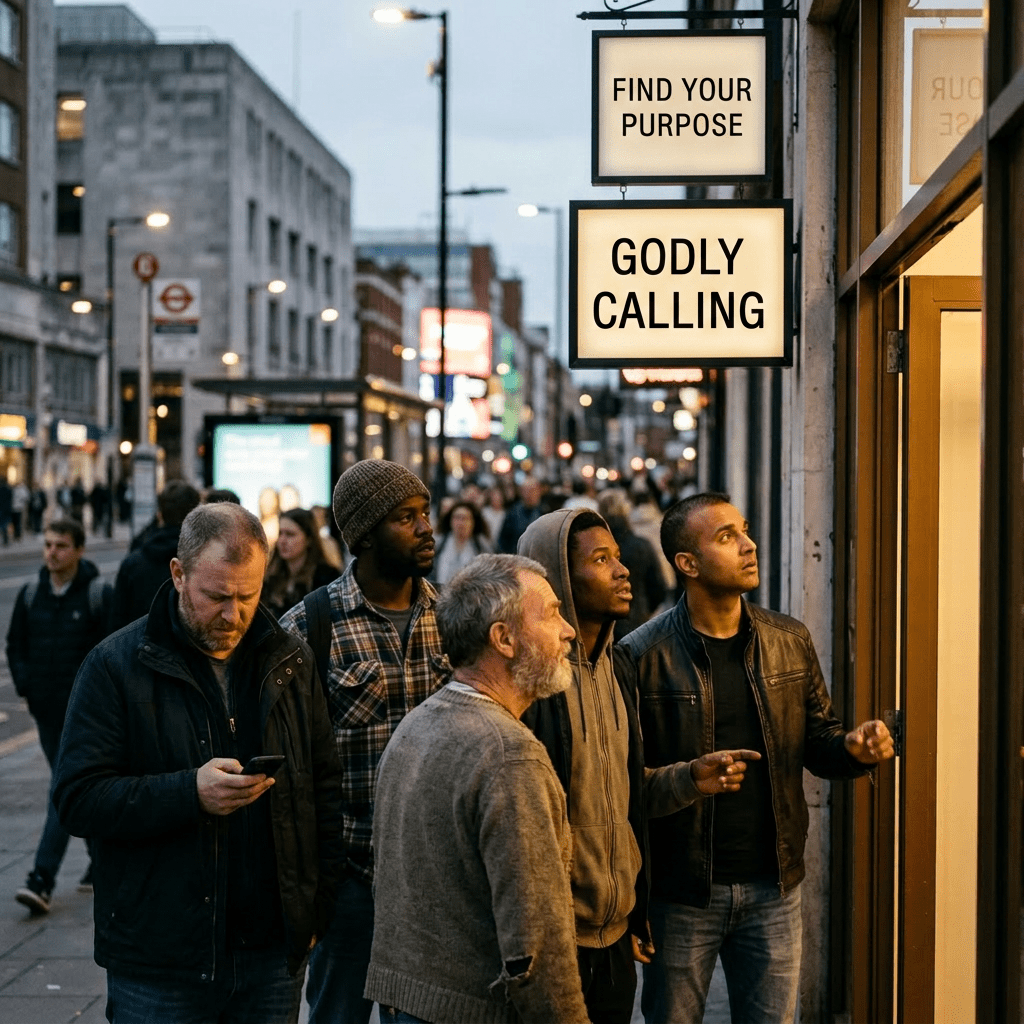
Not long after giving my life to Jesus, I started attending a monthly men’s fellowship at my church. Trust me, being in a space full of such godly men was both inspiring and a little intimidating. I remember thinking, “Wow, so this is what real-deal men of God look like.” Then one Friday evening, right when I thought I was starting to get the hang of things, one of the guys dropped a truth bomb that sent my mind spinning. He said, “The single biggest reason why the world is in the state that it is in (relationships, broken homes, drugs, violence, social decline) is men not walking in their godly purpose.” Boom. It felt like someone had dropped a microphone in the middle of the room. My thoughts went into overdrive like, did he seriously just say that? I took a while trying to wrap my mind around the weight of his words. Suddenly, it hit me like a freight train, the enemy isn’t just lurking in the shadows, he’s launching a full-on assault against men.
The cold, hard truth is that the enemy has buried a lie so deep in our culture that most people don’t even see it anymore. The lie says God’s design for men is dangerous and must be stopped. Instead, men are told to be superheroes, to fix everything, to never show weakness, to feel only one thing, stone-cold toughness. If a man falls or hurts in any way, the world barely bats an eye. If tragedy hits a man, unless he’s a celebrity or his story is juicy enough for headlines, he just disappears, and nobody really cares. The nameless, faceless men suffering violence or feeling inadequate, society just shrugs and moves on. But let another group encounter any suffering or hardship, and suddenly the world explodes with outrage and endless talk about how humanity has gone to the dogs. Even the idea that a man could be a victim gets laughed off, like it’s a joke. The culture screams that a real man is all about his bank account, how many women he can charm, and how tough he acts. The message is loud and clear, grab the flashiest car, collect all the trophies you can, whether those trophies are women, material possessions, or status, and never let anyone see you sweat. It’s all about image and swagger, never about the heart. Vulnerability? Forget it. There’s no space for that when you’re told your only worth is your muscles or your paycheck. And if you can’t keep up or meet the world’s demands, you get tossed aside like you never mattered at all.
Looking at the numbers, it is hard to deny that men are in a real crisis. The World Health Organisation estimates that 727,000 people died by suicide worldwide in 2021, and global data show that men died by suicide at more than twice the rate of women, about 12.3 per 100,000 men compared with 5.9 per 100,000 women. Substance use tells a similar story, WHO reports that 2.6 million deaths in 2019 were attributable to alcohol and another 0.6 million to psychoactive drugs, with the majority of those deaths occurring among men, in the same report, 52% of men worldwide were classified as current drinkers. Men are also overwhelmingly overrepresented in incarceration. The latest global prison figures indicate that about 11.5 million people are imprisoned worldwide. Women and girls make up only 6.8% of the global prison population, leaving men and boys accounting for roughly 93.2%. Homelessness is another area where men carry a disproportionate burden. Cross-national homelessness, though imperfect, suggests that across 33 countries with sex-disaggregated data, women were a smaller share of the homeless population in all but two countries, which means men are the majority in most reported settings.
Fatherlessness and paternal disengagement deepen the problem. Globally, UNICEF found that 55% of children aged 3 to 4 in 74 countries, about 40 million children, had fathers who did not play or engage in early learning activities with them, and in one U.S.-specific analysis, about 31.5% of boys under 18 were reported to be living in a home without their biological father, amounting to an estimated 12 million boys. Then there is mental health, another hidden battlefield men are fighting every day. While there is no single global figure for undiagnosed mental illness among men, men are less likely to receive treatment, and research suggests male depression can be missed because it often shows up through anger, risk-taking, substance use, or withdrawal rather than the symptoms people typically expect. Additionally, even within the life of the church, the statistics reveal a significant gap. Across 53 countries with enough Christian respondents to analyse, Pew found that 53% of Christian women reported attending services weekly, compared with 46% of Christian men. Even in my own church, I have seen this pattern firsthand: the overwhelming majority of new converts are female. Taken together, these figures are more than mere numbers. They highlight real spiritual, emotional, and social fractures in the lives of men globally. If you zoom out, it’s clear that men are facing real battles on every front, and the stakes couldn’t be any higher.
But here’s the real contrast: God’s vision for men is radically different from what the world is selling. If you want to know what makes a man in God’s eyes, don’t look to social media ‘alpha-male’ advice or whatever the latest trend is. Look no further than Scripture. Being a godly man isn’t about flexing, dominating, or chasing clout. It’s about mirroring God’s character, living under His authority, and showing up for the responsibilities He’s placed in your hands.
So, what does real, Godly manhood look like?
Godly men are called to go all in, loving God with every part of who they are and withholding nothing (Deuteronomy 6:5, Matthew 22:37). In Deuteronomy 6:5, the Shema directs believers to “love the LORD your God with all your heart and with all your soul and with all your strength,” emphasising that authentic faith is marked by total devotion. Similarly, in Matthew 22:37, Jesus names this as the greatest commandment, establishing it as foundational to Christian identity. Godly men recognise that faith is not a convenient addition to life; rather, as Joshua 1:8 commands, meditating on God’s word and acting on it must guide their lives, setting them apart from cultural norms (Romans 12:1–2). Genuine spiritual strength, therefore, is not defined by authority or dominance, but by a pattern of service, self-sacrifice, and Christlike leadership, as modelled in Mark 10:42–45, where Jesus teaches that greatness is found in serving others. Within marriage, Ephesians 5:25–33 instructs husbands to love their wives as Christ loved the church, with sacrificial, self-giving love. As fathers, godly men are expected to lead their children toward God through personal example, echoing Proverbs, “train up a child in the way he should go.” In stewardship, Genesis 2:15 and 1 Timothy 5:8 emphasise diligent work and responsible management of what the Lord has provided, rejecting laziness or excuses (Proverbs 12:11; 22:29; 2 Thessalonians 3:10). Godly men are called to exercise self-control, avoiding temptation and upholding integrity whether in public or private (Job 31:1 and 1 Corinthians 6:18–20). Godly men gain courage that is anchored in trust in God’s strength over their own (Joshua 1:9, 1 Corinthians 16:13–14, Ephesians 6:10), compelling them to persevere after setbacks rather than rely solely on their own abilities. When evil arises, as Micah 6:8 and Psalm 82:3–4 show, godly men respond proactively, pursuing justice and mercy and maintaining righteousness despite personal cost (Proverbs 21:3). These men are called to invest in others through discipleship, fulfilling the biblical mandate to pass down truth and wisdom from generation to generation (Psalm 78:5–7, 2 Timothy 2:2, Matthew 28:19–20).
So the question is not whether the world has a broken vision of manhood. It does. The real question is whether men will keep bowing to that vision or return to God’s design. This is a call to reject counterfeit masculinity, surrender fully to Christ, and begin walking faithfully in the responsibilities God has already placed in your hands. Because when men do that, statistics begin to change. The man who might have taken his life finds a reason to keep living. The man trapped in addiction begins the fight for freedom. The passive father becomes present. The man drowning in silence reaches out for help instead of hiding behind anger or pride. The church gains men who pray, lead, serve, and disciple. Families gain protection, consistency, and love. Communities feel the difference. When men walk in their godly calling, homes heal, churches grow stronger, and the culture shifts.








Leave a Reply